


Venture Design Case Study

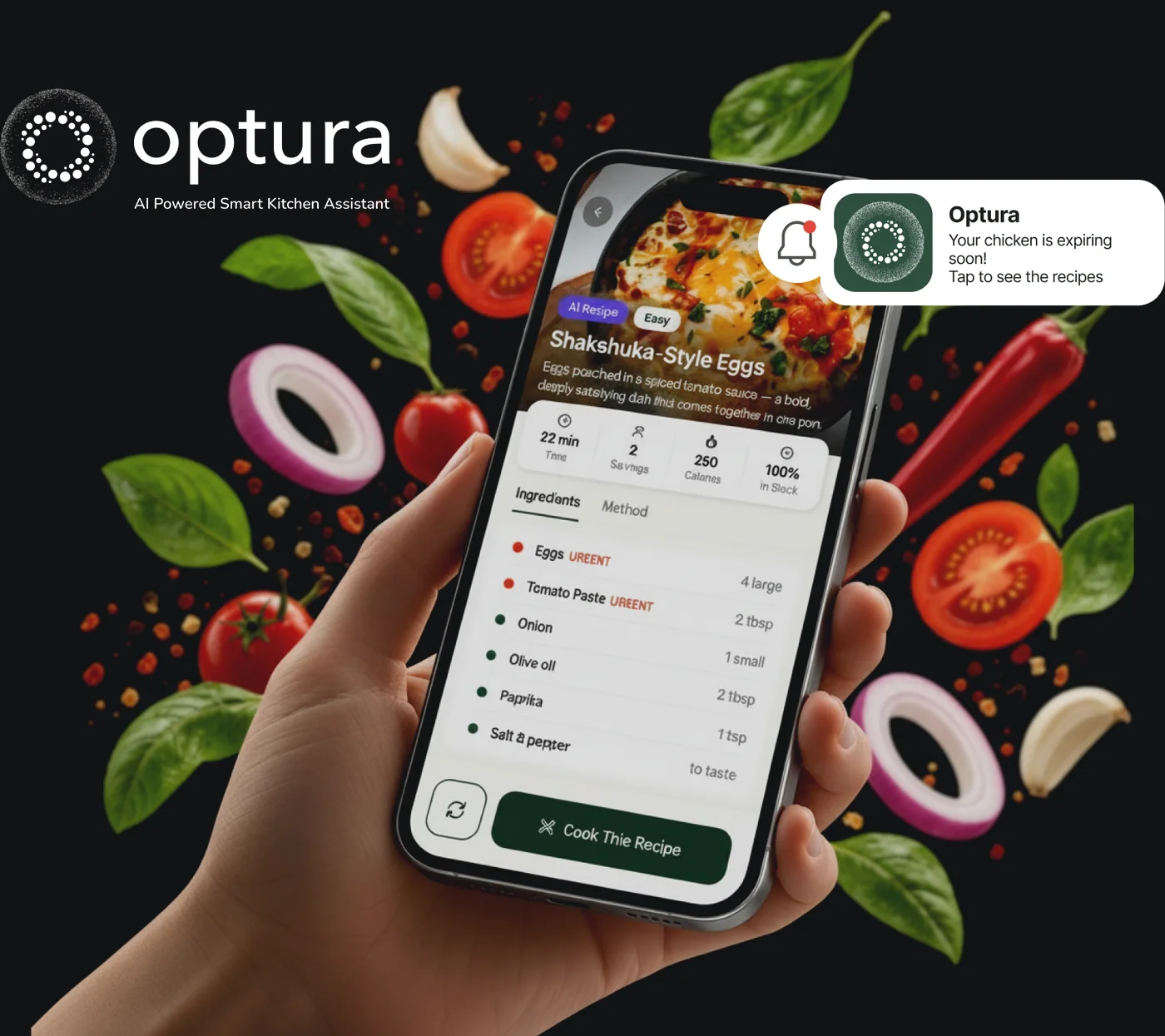
Optura

Exploring how venture design, behavioral science, and AI can help reduce household food waste — one decision at a time.

Founder &
Venture Designer
2021 –
Present
Food Systems · AI
Behavior · Venture Design
Turkey
→ Spain
Scroll

Food waste doesn't happen because people don't care.

When we talk about food waste, the conversation often focuses on awareness. Yet most people already know wasting food is a problem.

Food disappears into the back of the fridge. Expiration dates are forgotten. Meal decisions are made under time pressure. Grocery purchases and daily consumption become disconnected.

The more I explored the problem, the more I realized this is not primarily a sustainability issue.

It's a systems design issue.

Food Waste System Flow
PURCHASE grocery shopping STORAGE fridge & pantry DAILY USE meal decisions FORGOTTEN out of sight EXPIRED too late WASTE € cost + CO₂ OPTURA INTERVENES HERE 30% of food bought is wasted
03The Beginning

Following a problem for longer than a product.

My interest in food waste began in 2021. What started as curiosity gradually became a long-term exploration.

Over the years, I tested multiple directions, studied emerging technologies, analyzed competitors, and followed the evolution of food-tech solutions around the world.

One pattern repeatedly stood out: many solutions focused on helping people buy food. Very few focused on helping them manage it after purchase.

That observation eventually became the foundation of Optura.

Venture Timeline
2021 Initial Exploration Food waste curiosity begins 2022 Optura Founded First MVP built & tested 2024 BeVisioneers + Barcelona Fellowship & Elisava MSc 2025 Early Validation Spain market research NOW Rebuild & Explore New venture direction

Before designing a solution, I needed to understand the system.

Rather than immediately building a product, I focused on understanding the broader ecosystem surrounding household food waste.

Research included:

  • Household behaviors and food management patterns
  • Existing food-waste apps and their limitations
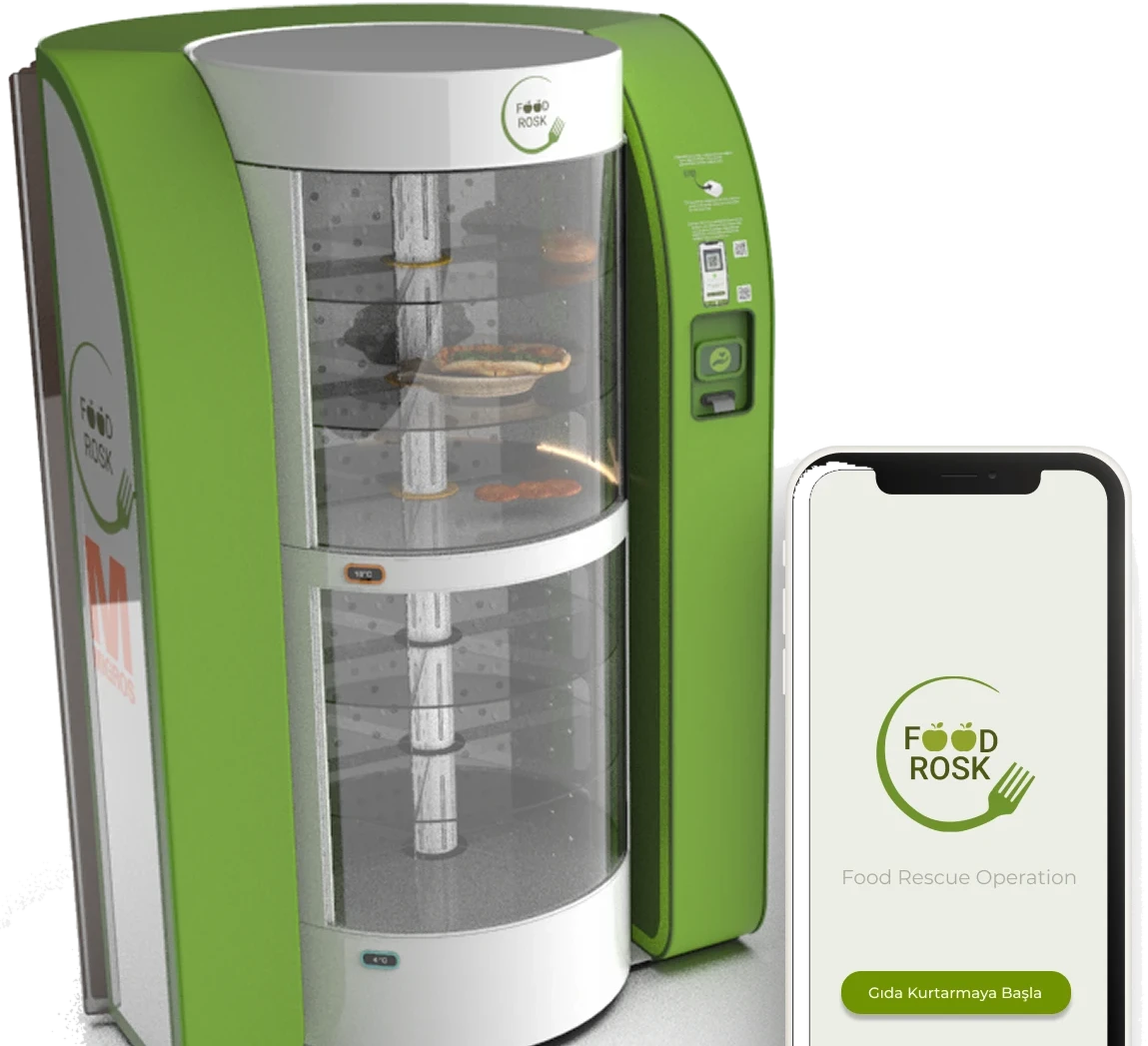
  • Smart fridge products and IoT ecosystem
  • Retail ecosystems and supply chain dynamics
  • Sustainability regulations across markets
  • Behavioral science literature on habit formation
  • Food-tech startups worldwide

This work revealed that waste is not created by a single actor. It emerges from the interaction between households, retailers, technology, incentives, and timing.

Stakeholder Ecosystem
OPTURA platform House- holds Retail- ers Food Brands Policy Makers Tech Infra Logis- tics Media & NGOs Food- Tech Regula- tors
05Why Spain?

Expanding the exploration beyond Turkey.

As the venture evolved, I became increasingly interested in understanding how food waste is approached across different markets.

Spain emerged as a particularly interesting environment. Moving to Barcelona allowed me to continue exploring the problem within a broader European context while conducting market research and engaging with local stakeholders.

  • Strong sustainability awareness among consumers
  • Growing food-tech ecosystem in Barcelona and Madrid
  • Regulatory shift: Ley 1/2025 on food waste
  • Increasing retailer responsibility requirements
Spain Market Context
7.7M TONNES / YEAR food wasted in Spain SOURCE: MAPA 2023 42% FROM HOUSEHOLDS wasted at home vs supply chain EUROSTAT 2024 LEY 1/2025 Spain's Food Waste Law — mandates retailers and food businesses to adopt waste-reduction plans. FOOD-TECH HUBS BCN + MAD EU MARKET ACCESS 450M people
Ece Bozca

The venture wasn't the only thing being designed.

As Optura evolved, I realized that solving a systems-level challenge required capabilities beyond traditional product and service design.

Questions around venture creation, business models, innovation strategy, and ecosystem design became just as important as the product itself.

To strengthen those capabilities, I joined the BeVisioneers Fellowship and later moved to Barcelona to pursue a Master's in Business Design at Elisava.

Both experiences became extensions of the venture — helping me challenge assumptions, refine opportunities, and develop a broader perspective on how meaningful change is created.

Growth Path
Origin
Food Waste Problem
Venture
Optura
Fellowship
Education
Elisava MSc
Expansion
European Market
07Opportunity Discovery

The most important insight wasn't technical.

"Households don't need another shopping list app. They need support in the moments where waste actually happens."

— Core insight, Optura venture research

Most existing solutions focus on planning.

The larger opportunity appears after the purchase — inside the home, inside daily routines, inside small decisions that determine whether food gets consumed or discarded.

This insight became the strategic foundation of Optura.

Opportunity Landscape
BEFORE PURCHASE AFTER PURCHASE purchase → EXISTING SOLUTIONS Shopping list apps Meal planning tools Recipe platforms Smart fridges Expiry apps OPTURA SPACE Fridge inventory AI Waste prediction Contextual nudges Retailer value loop Household insights

Designing a system where better decisions become easier decisions.

Optura explores how AI, behavioral design, and ecosystem partnerships could work together to reduce household waste.

The objective is not simply to create another sustainability app. The objective is to align households, retailers, and technology around the same outcome — less waste, more value.

Value Exchange Model
House- holds users OPTURA AI Platform behavior layer Retail- ers partners data nudges insights revenue ALIGNING INCENTIVES ACROSS THE SYSTEM
01
Behavioral Design
Reducing friction, not demanding willpower
Designing for the moments right before waste happens — not generic reminders, but timely, contextual interventions that make the right choice the easy choice.
02
Applied AI
Predicting waste before it happens
Building a prediction layer that understands household food patterns and surfaces at-risk items before the user even has to think about it.
03
Ecosystem Partnerships
Designing the business model as the product
Exploring retailer partnerships where waste reduction creates value for both households and the supply chain — aligning incentives across the system.
08bFrom Insight to Intervention

Translating research into product hypotheses.

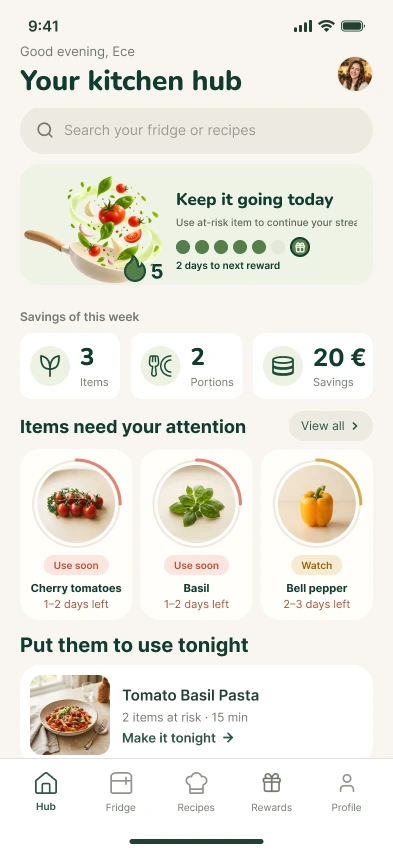
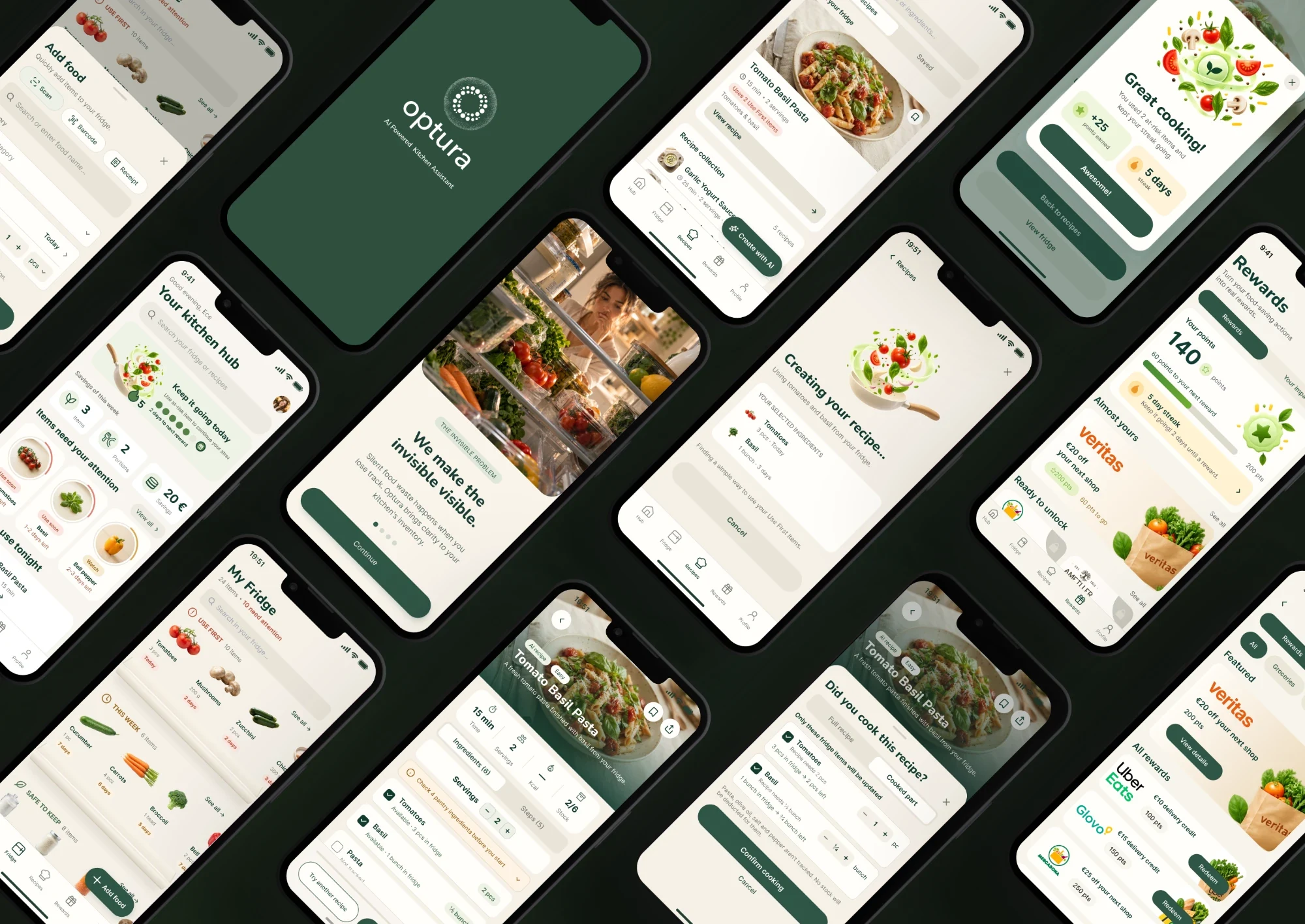
Rather than asking users to manually manage their inventory, Optura explored how AI can reduce friction and support decision-making at critical moments.

The product direction emerged directly from the research findings and focused on four key behavioral challenges:

01
Visibility
Making what you own visible before it disappears.
02
Awareness
Surfacing what's at risk before the moment of waste.
03
Action
Reducing the distance between knowing and doing.
04
Reinforcement
Building habits through positive feedback loops.
Intervention Model
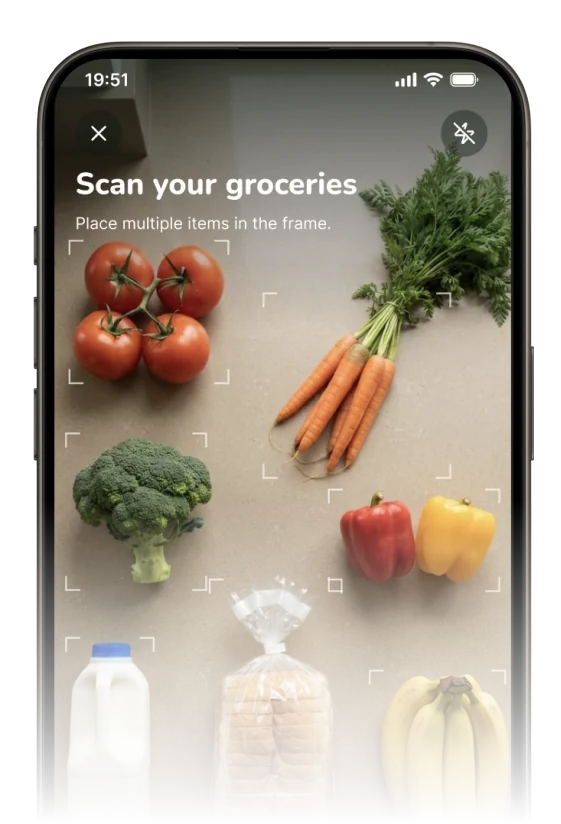
Scan
Receipt → Inventory
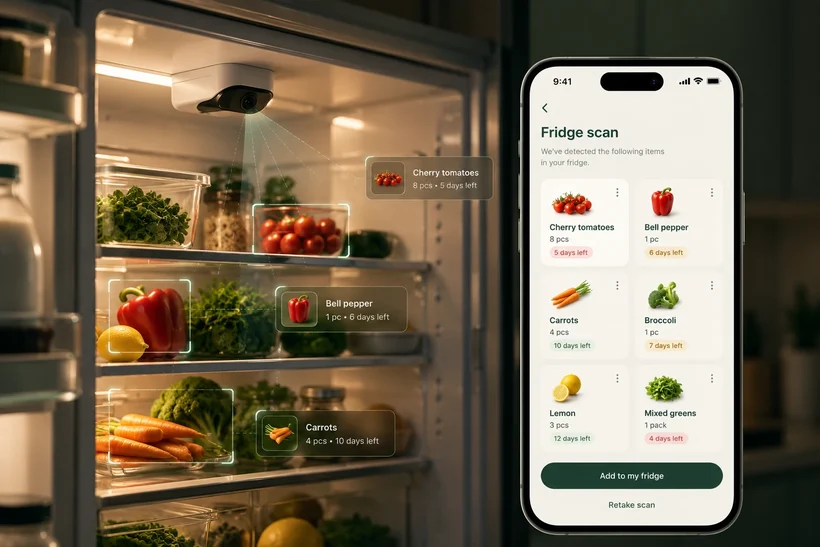
Track
Inventory → Visibility
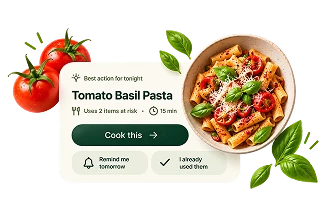
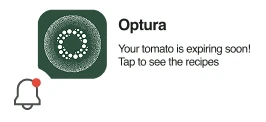
Cook
At-risk items → Recipes
Reward
Habit → Reinforcement
How It Works
click to pause
01
Scan
Reduce inventory logging friction.

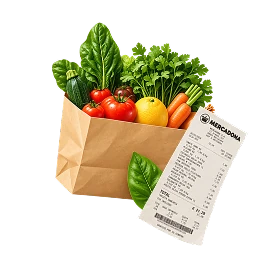
AI-assisted receipt scanning explored how food could enter the system with minimal effort from users. Rather than manual input, the hypothesis was that scanning a grocery receipt could automatically populate a household inventory.

Track
Increase visibility.

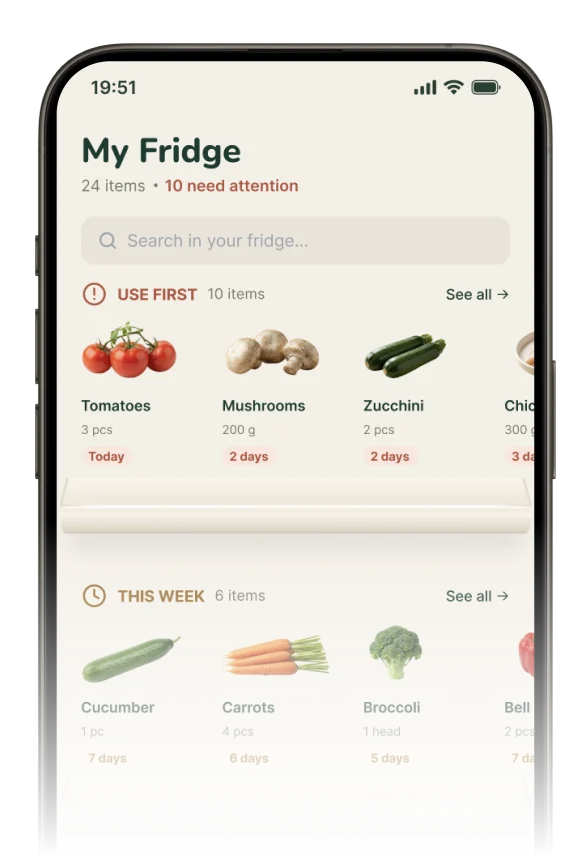
Inventory tracking focused on helping households understand what they already have before making new purchasing decisions. The core design challenge was making expiry risk legible at a glance — without creating anxiety.

02
Track
Cook
Encourage action.

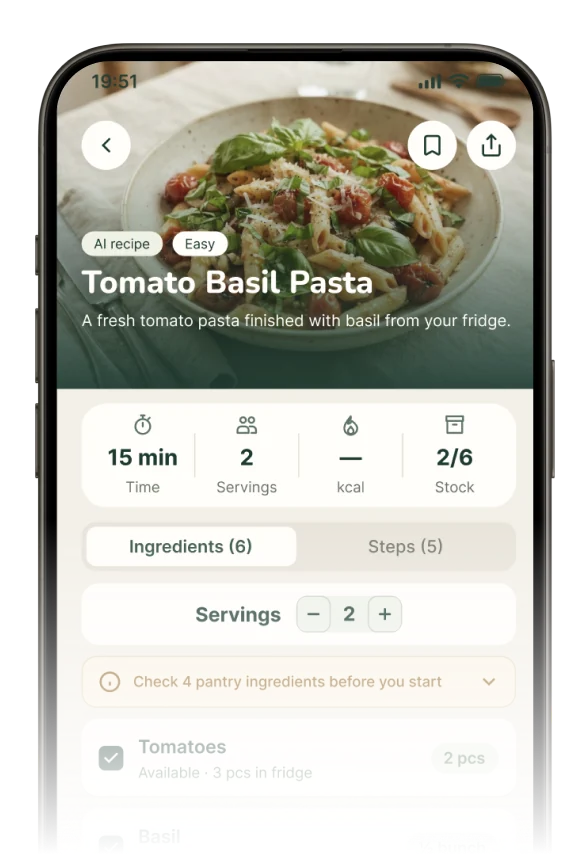
Recipe recommendations were designed to prioritize ingredients at risk of becoming waste rather than simply suggesting meals. The design hypothesis: if the right recipe appears at the right moment, the decision to cook becomes easier than the decision to discard.

03
Cook
04
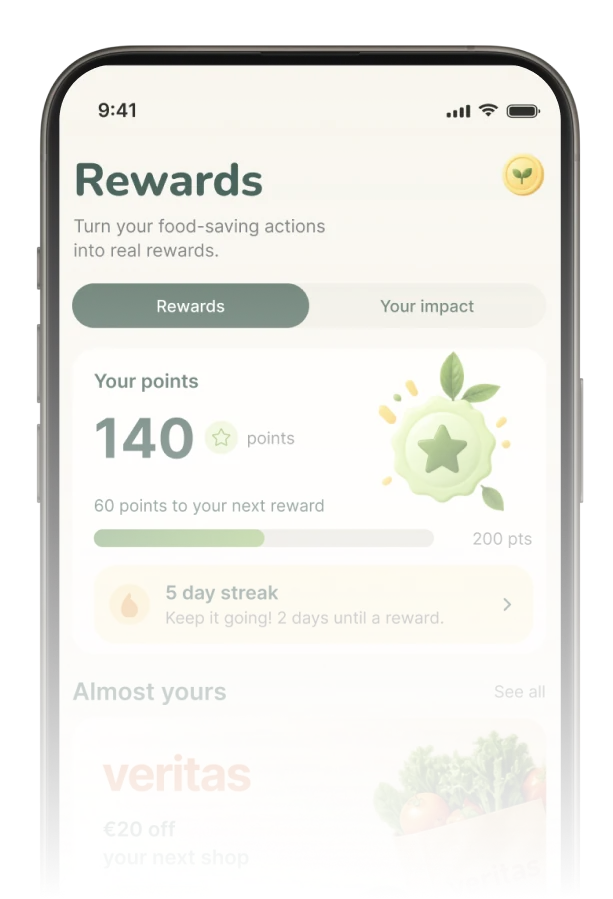
Reward
Reinforce behavior.

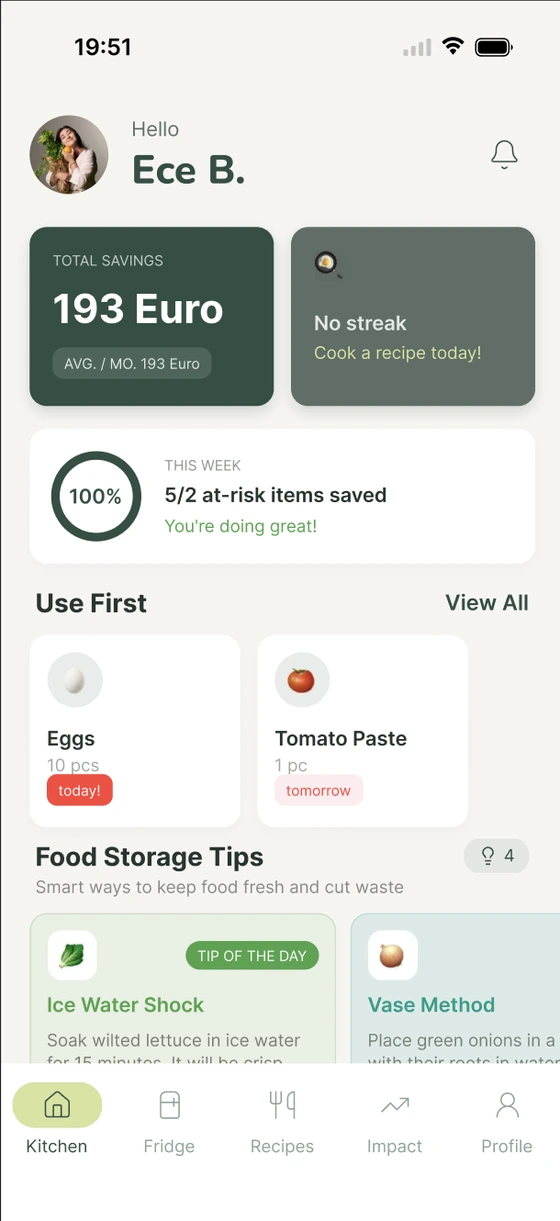
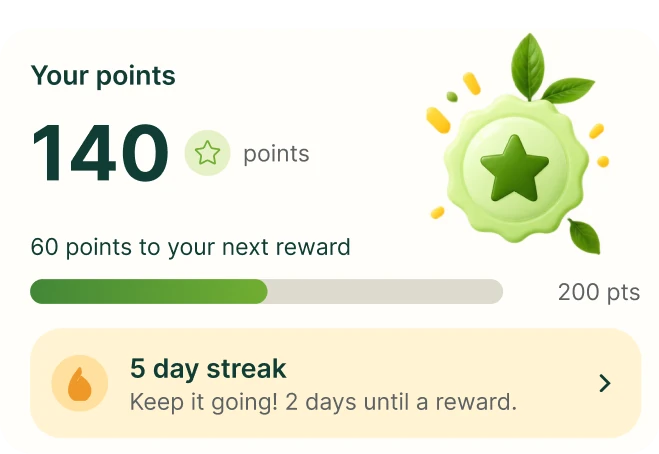
Points, streaks, and progress mechanisms explored how long-term habits could be encouraged through positive reinforcement. The hypothesis was that making waste reduction tangible — in euros saved, kilograms avoided — would sustain engagement beyond novelty.

A note on the current product state

The screens presented here reflect the original product direction explored through the first MVP. Since then, the platform has entered a rebuilding phase while the venture continues evolving through market research, business model exploration, and ecosystem validation in Spain.

The product is still being shaped by ongoing learning. This case study focuses on the venture design process rather than a finished product.

09Current Status

Where things stand today.

The original MVP validated key assumptions around inventory awareness, intervention timing, and behavior-change mechanisms.

The platform is currently being rebuilt with a stronger technical foundation. Ongoing research in Barcelona is helping refine:

  • Target audience and segmentation
  • Business model and revenue design
  • Positioning and brand direction
  • Partnership opportunities in Spain and EU
  • Market entry strategy

Optura remains an active exploration rather than a finished company.

And that is precisely what makes it one of the most valuable learning experiences of my career.

Exploration Roadmap
PHASE 1 — COMPLETE Problem validation + MVP build PHASE 2 — COMPLETE BeVisioneers + Barcelona relocation PHASE 3 — ACTIVE NOW Spain market research + MSc PHASE 4 — UPCOMING New venture direction + pilots PHASE 5 — FUTURE EU market entry + scale
2021–Now Years of exploration
15+ Early adopters validated MVP
2 markets Turkey & Spain researched

What Optura
taught me.

Optura fundamentally changed how I think about innovation.

It taught me that products rarely solve problems on their own. Meaningful change happens when products, business models, incentives, policies, and human behavior align around the same outcome.

More importantly, it taught me that ventures themselves can be designed. And that some of the most valuable discoveries happen long before a product reaches the market.

"Ece didn't just build a startup. She spent years understanding a complex problem, designing a venture around it, and evolving her own capabilities along the way."

Next case study
ENTA Transformation
View project